
What’s Next for Smart Water Management in Asia-Pacific
How autonomous systems, predictive AI, and chemical-free solutions are reshaping freshwater management across the region’s cities and utilities
Introduction: Asia-Pacific at the Forefront of Water Innovation
Asia-Pacific stands at a unique inflection point in water management. The region accounts for 60% of the world’s population but holds only 36% of global freshwater resources. Rapid urbanization—with 200 million people moving to cities each decade—places unprecedented pressure on lakes, reservoirs, canals, and urban water infrastructure. Climate change compounds these challenges, driving more severe flooding, prolonged droughts, and accelerating eutrophication in freshwater bodies.
Yet this same pressure is catalyzing innovation. Asia-Pacific governments are investing heavily in smart city infrastructure, environmental resilience, and next-generation water management technologies. From Singapore’s Smart Nation initiatives to South Korea’s Green New Deal, from Vietnam’s climate adaptation programs to China’s Sponge City framework, the region is pioneering approaches that balance rapid development with environmental sustainability.
As we move through 2026, five key technology trends are fundamentally transforming how Asia-Pacific cities and utilities manage freshwater environments. These trends aren’t abstract futures—they’re operational realities being deployed today by forward-thinking agencies seeking to reduce costs, improve water quality, and build climate-resilient infrastructure.
Understanding these trends—and the integrated solutions addressing them—will determine which cities successfully navigate the intensifying pressures on freshwater resources and which struggle with reactive crisis management.
Trend 1: From Monitoring to Autonomous Remediation
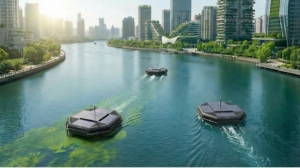
The shift: Traditional water management separates monitoring from action. Sensors collect data, humans analyze reports, decisions get made, and separate crews mobilize to treat problems. This sequential workflow introduces delays, requires extensive coordination, and depends heavily on manual labor for both data collection and field operations.
The 2026 paradigm inverts this model: autonomous systems that simultaneously monitor and remediate, with AI closing the loop in real-time.
Why This Matters in Asia-Pacific
Labor costs are rising sharply across developed Asia-Pacific economies. Singapore, Japan, South Korea, and Australia face acute workforce shortages in environmental field operations. Even in countries with historically lower labor costs, younger generations increasingly avoid physically demanding outdoor work, creating recruitment challenges for water utilities and parks agencies.
Manual water quality patrols—deploying personnel on boats to inspect reservoirs, collect samples, and physically remove algae and debris—become economically and operationally unsustainable as the number of managed water bodies expands while available workforce contracts.
Simultaneously, climate change drives more frequent and severe water quality events. When multiple algal blooms occur simultaneously across a portfolio of lakes and reservoirs, agencies face impossible prioritization decisions: Which sites get immediate attention? How quickly can crews mobilize? What happens to lower-priority sites during the response window?
The Technology Response
Autonomous water robots equipped with both sensing and remediation capabilities are transforming this equation. These systems operate 24/7 without human intervention, continuously monitoring water quality parameters while simultaneously removing algae, organic debris, and floating pollutants.
Unlike traditional approaches where monitoring identifies problems for later human response, autonomous remediation systems act immediately—detecting emerging contamination and physically removing it before it escalates into visible blooms or requires chemical intervention.
Ecopeace’s ECO-BOT platform exemplifies this integrated approach: 5-meter autonomous vessels deploy customizable sensor suites (temperature, pH, dissolved oxygen, turbidity, chlorophyll-a, conductivity) while actively filtering 100,000 to 500,000 liters daily. Field deployments across Asia-Pacific demonstrate up to 91% reduction in chlorophyll-a—achieved through continuous physical removal rather than periodic chemical treatments.
The operational advantage is profound: agencies shift from labor-intensive reactive emergency response to autonomous preventive management. Multiple robots can patrol extensive reservoir systems simultaneously, providing comprehensive spatial coverage impossible with manual patrols constrained by crew availability and working hours.
Key implications for agencies:
- Reduced dependency on scarce field labor
- Elimination of delays between problem detection and remediation
- Continuous operation regardless of weather, holidays, or personnel availability
- Scalable coverage across multiple water bodies without proportional workforce expansion
- Lower operational costs through prevention rather than crisis response
Trend 2: Predictive Intelligence and Digital Twin Platforms
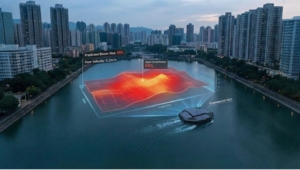
The shift: Reactive management responds to visible problems after they occur. Predictive management anticipates problems before they become visible, enabling preventive intervention when costs and environmental impacts are minimized.
Asia-Pacific agencies managing freshwater resources increasingly demand this forward-looking capability as climate variability makes historical patterns unreliable guides to future conditions.
The Data Challenge
Traditional water quality monitoring produces sparse data: periodic manual sampling at fixed locations, analyzed in labs with multi-day turnaround times. This approach misses rapid-onset events, fails to capture spatial heterogeneity across large water bodies, and provides no predictive insight into emerging trends.
Smart water management in 2026 requires continuous high-resolution data streams that reveal not just current conditions but trajectory—where water quality is heading under different weather scenarios, which zones face highest contamination risk, when preventive interventions will deliver maximum impact.
Digital Twins for Water Bodies
Digital twin technology—virtual representations of physical water bodies that integrate real-time sensor data with hydrodynamic models, weather forecasts, and historical patterns—is rapidly maturing from research concept to operational tool.
These platforms visualize water quality spatially and temporally through dynamic heatmaps showing contamination distribution, dissolved oxygen levels, temperature stratification, and algal bloom formation. More importantly, machine learning algorithms analyze patterns to detect anomalies that precede eutrophication events, enabling early warning days or weeks before visible blooms appear.
Ecopeace’s AI platform demonstrates this predictive approach: Continuous data streams from deployed ECO-BOT robots feed cloud-based analytics that identify unusual parameter combinations signaling pre-bloom conditions. The system doesn’t just alert human operators—it autonomously redirects robots to priority treatment zones, optimizing resource allocation in real-time based on predictive risk assessments.
Regional Adoption Drivers
Several Asia-Pacific factors accelerate digital twin adoption:
Smart city integration: Singapore, Seoul, Shenzhen, and other regional tech hubs are building comprehensive urban data platforms. Water quality digital twins integrate naturally with broader environmental monitoring, enabling cross-domain insights (e.g., correlating stormwater events with reservoir contamination).
Public transparency expectations: Citizens in developed Asia-Pacific cities expect real-time environmental data access. Digital twin platforms support public dashboards showing water quality status, building trust and demonstrating proactive management.
Climate adaptation planning: National and municipal climate action plans require scenario modeling and predictive capacity. Digital twins enable “what-if” analysis: How will water quality respond to projected temperature increases? What intervention strategies prove most cost-effective under different climate scenarios?
Regulatory reporting: Environmental compliance increasingly requires continuous monitoring data. Digital twin platforms automate report generation, reducing administrative burden while improving data quality and temporal resolution.
Key implications for agencies:
- Proactive intervention before problems become visible to the public
- Optimized resource allocation based on predictive risk rather than reactive scrambling
- Integration with smart city data ecosystems
- Scenario planning for climate adaptation strategies
- Automated compliance reporting and public transparency
Trend 3: Chemical-Free Physical Remediation

The shift: For decades, algal bloom response defaulted to chemical algaecides. These treatments offer quick visible results—killing algae within hours or days—but introduce significant operational and environmental challenges that are driving Asia-Pacific agencies toward chemical-free alternatives.
The Problem with Chemical Treatments
Chemical algaecides kill algae but don’t remove the biomass. Dead algae decompose, consuming dissolved oxygen and potentially creating worse water quality conditions than the original bloom. High biomass blooms can trigger hypoxic or anoxic conditions (oxygen depletion) that cause fish kills and ecosystem collapse.
Chemical treatments require:
- Complex procurement processes and storage logistics
- Environmental permitting and regulatory compliance
- Trained personnel for application with safety equipment
- Repeated applications as algae regrow
- Concerns about secondary contamination and impacts on non-target organisms
- Public anxiety about chemical use in recreational water bodies
Moreover, chemical approaches don’t address root causes. Nutrients remain in the water column, supporting subsequent bloom cycles. The result: a reactive treadmill of repeated chemical applications managing symptoms rather than solving underlying eutrophication.
Physical Removal Advantages
Chemical-free physical removal—extracting algae, organic debris, and floating pollutants directly from water bodies—eliminates these problems while delivering multiple benefits:
No secondary pollution: Removing organic material eliminates the contamination source rather than leaving decomposing biomass in the water column.
Nutrient export: Physical removal extracts nutrients bound in algal cells, helping break the eutrophication cycle rather than perpetuating it.
Ecosystem safety: No chemical exposure risks to fish, birds, aquatic invertebrates, or human recreators.
Operational simplicity: No procurement of hazardous materials, no storage requirements, no permitting complexity.
Public perception: Citizens and environmental groups strongly prefer chemical-free approaches, particularly in urban parks and recreational water bodies.
Asia-Pacific Regulatory Momentum
Environmental regulations across Asia-Pacific increasingly restrict or discourage chemical treatments in sensitive freshwater environments:
- Singapore’s blue-green spaces: High-visibility urban reservoirs and park lakes face public scrutiny on chemical use
- South Korea’s eco-friendly policies: Government green investment programs prioritize chemical-free technologies
- Japan’s ecosystem protection: Strict environmental standards limit chemical applications in protected water bodies
- Australia’s sustainability mandates: State and municipal governments commit to reducing chemical inputs under environmental action plans
This regulatory environment strongly favors technologies that deliver effective pollution removal without chemical dependence.
Ecopeace’s chemical-free approach directly addresses this trend: Physical filtration systems on ECO-BOT robots and ECO-STATION infrastructure continuously remove algae and organic pollutants through mechanical processes, with no chemicals introduced. The 91% chlorophyll-a reduction achieved in field deployments demonstrates that physical removal delivers results comparable to or exceeding chemical treatments—without environmental or regulatory complications.
Key implications for agencies:
- Simplified operational workflows without chemical procurement and permitting
- Improved ecosystem health and biodiversity protection
- Enhanced public perception and community support
- Alignment with sustainability mandates and ESG commitments
- Breaking the reactive cycle through nutrient export
- Reduced long-term costs by addressing root causes rather than symptoms
Trend 4: Flexible Acquisition and Service Models
The shift: Traditional infrastructure procurement—capital purchases with long approval cycles, multi-year depreciation, and agency-borne maintenance responsibility—is giving way to flexible service models that reduce upfront costs, accelerate deployment, and transfer operational risk.
This trend is particularly pronounced in Asia-Pacific, where:
- Capital budgets face intense competition across infrastructure priorities
- Procurement cycles for new technology categories can extend years
- Risk-averse decision-makers prefer proven solutions before major capital commitments
- Rapid urban growth demands scalable approaches that expand incrementally
The Procurement Challenge
A government water utility considering autonomous water management technology faces institutional hurdles:
Capital budget constraints: Competition with other infrastructure priorities (treatment plants, pipeline networks, flood management) makes securing large upfront funding difficult.
Technology risk perception: Autonomous robotics represents a new operational paradigm. Decision-makers need proof of performance before committing capital.
Operational uncertainty: How many robots does a site require? What happens if needs change? How does technology refresh work as capabilities improve?
Maintenance responsibility: Capital purchases transfer all maintenance costs and responsibilities to the agency. What if specialized expertise is needed? What about parts availability?
These barriers slow adoption even when the underlying technology clearly delivers value.
Service Models as Accelerators
Forward-thinking technology providers address these barriers through service-based acquisition:
Pay-for-performance: Agencies pay based on operational hours, water volume treated, or water quality improvements achieved rather than upfront hardware purchase.
Pilot-to-scale pathways: Time-bound proof-of-concept deployments (3-6 months) with clear performance metrics let agencies validate effectiveness before committing to larger-scale implementation.
Rental and leasing: Convert capital expenditure to operational expense, simplifying budget approvals and enabling faster procurement.
Technology refresh included: As autonomous systems and AI capabilities improve, service models ensure agencies benefit from upgrades without additional capital investment.
Maintenance and operations included: Provider responsibility for maintenance, repairs, and operational support eliminates the need for agencies to develop in-house specialized expertise.
Scalable deployment: Start with one or two units on high-priority water bodies, expand based on validated results. Scale up or down as needs evolve.
Ecopeace’s flexible acquisition approach removes traditional procurement barriers: agencies can pilot ECO-BOT deployments with defined performance metrics, validate chlorophyll-a reduction and operational cost impacts, then scale across multiple sites. Service arrangements include maintenance, software updates, and operational support—transforming water management into a predictable operational expense rather than a capital gamble on unproven technology.
Key implications for agencies:
- Faster procurement and deployment timelines
- Reduced financial risk through proof-of-concept validation
- Lower upfront costs through operational expense structures
- Simplified budgeting and financial planning
- Access to continuous technology improvements
- No internal maintenance expertise development required
- Scalable expansion matched to validated results and evolving needs
Trend 5: Dual-Purpose Infrastructure and Citizen Engagement

The shift: Traditional water quality infrastructure operates invisibly—treatment plants hidden from view, monitoring sensors unnoticed, management activities conducted away from public attention. This invisibility creates a disconnect: citizens don’t see environmental stewardship efforts, don’t understand water management challenges, and don’t engage with conservation priorities.
Asia-Pacific cities pioneering smart liveable urban design increasingly recognize that environmental infrastructure can serve dual purposes—delivering functional water quality improvements while simultaneously creating community value, tourism attractions, and public engagement opportunities.
The Visibility Advantage
When water management operates invisibly, public perception focuses on problems (visible algae blooms, complaints about water quality) rather than solutions. Agencies receive criticism when issues occur but little credit for preventive work that happens behind the scenes.
Visible, engaging water management infrastructure changes this dynamic:
Public recognition of environmental action: Citizens see agencies actively managing water quality in ways that enhance rather than restrict recreational use.
Educational opportunities: Interpretive content explaining water quality, ecosystem health, and technology innovations builds public environmental literacy.
Community pride and place-making: Unique environmental infrastructure becomes a district identity marker, supporting tourism and economic development.
Youth engagement: Interactive, technology-forward water management attracts younger demographics often disconnected from traditional environmental messaging.
Asia-Pacific Context
Several regional factors make dual-purpose water infrastructure particularly valuable:
Urban density and water scarcity: Limited recreational space means every water body must deliver multiple values—ecological function, recreational amenity, urban cooling, aesthetic quality.
Tourism importance: Cities from Singapore to Bali, Seoul to Sydney depend on waterfront attractions. Water quality directly affects tourism revenue and destination competitiveness.
Smart city branding: Cities positioning themselves as innovation leaders need visible demonstrations of next-generation technology applied to livability and sustainability.
Public accountability: High citizen expectations for environmental quality demand transparent, visible action on water management.
HEALING-BOAT: The Exemplar
Ecopeace’s HEALING-BOAT concept directly addresses this trend, combining industrial-scale water purification (2.5 million liters daily) with public recreational and educational functions.
The 25-meter solar-powered autonomous vessel operates as:
Functional water management asset: Chemical-free physical filtration continuously removes algae, debris, and pollutants across urban reservoirs, tourism lakes, and recreational water bodies.
Educational platform: Guided eco-tours (up to 8 passengers) with digital displays showing real-time water quality data, local ecosystem information, and 3D underwater visualization create immersive environmental education experiences.
Tourism attraction: Unique eco-leisure offering differentiates waterfront districts, supporting tourism boards and economic development agencies.
Community venue: Flexible evening programming (waterfront dining, cultural events, fireworks viewing) transforms water quality infrastructure into community amenity.
Revenue generation: Unlike purely operational equipment, HEALING-BOAT can generate income through tour bookings, educational programs, and event hosting—creating a self-sustaining financial model that offsets operational costs.
This dual-purpose approach addresses multiple agency priorities simultaneously: water quality, community engagement, tourism development, sustainability demonstration, and financial sustainability.
Recognition validates the concept: HEALING-BOAT’s CES 2025 Innovation Award in the Smart City category acknowledges its pioneering integration of environmental function with citizen-centric design—precisely the approach Asia-Pacific cities need as they balance environmental protection with economic development and livability goals.
Key implications for agencies:
- Transformation of operational expense into partially self-funding community asset
- Enhanced public understanding and support for environmental programs
- Tourism and economic development value creation
- Smart city visibility and innovation branding
- Integration of environmental stewardship with recreational amenity
- Multi-departmental value (parks, environment, tourism, economic development)
Bringing It Together: Integrated Water Intelligence
While each trend delivers individual value, the transformative potential emerges when they integrate into comprehensive water intelligence platforms:
Autonomous remediation robots continuously monitor and treat water bodies, operating 24/7 across multiple sites simultaneously.
Predictive AI platforms analyze real-time data streams, detect anomalies, forecast emerging problems, and autonomously optimize robot operations.
Chemical-free physical removal eliminates environmental risks and regulatory complexity while achieving measurable water quality improvements.
Flexible service models accelerate adoption, reduce financial risk, and scale with validated success.
Dual-purpose infrastructure transforms functional operations into community assets that generate revenue and public support.
This is Ecopeace’s integrated value proposition: Not point solutions addressing isolated problems, but end-to-end water intelligence systems that span hardware (ECO-BOT robots, ECO-STATION infrastructure, HEALING-BOAT dual-purpose vessels), software (AI analytics, digital twins, predictive modeling), and services (pilot programs, performance validation, operational support, flexible acquisition).
The closed-loop system continuously executes the management cycle—Monitor → Analyze → Predict → Act → Report—autonomously, predictively, and transparently.
Regional Implementation Landscape
Across Asia-Pacific, forward-thinking agencies are piloting and deploying these integrated approaches:
Singapore: High labor costs, manpower constraints, and intense public expectations for environmental quality drive interest in autonomous solutions. Urban reservoirs serving recreational and water supply functions demand chemical-free approaches. Smart Nation infrastructure supports digital twin integration.
South Korea: Government green investment programs prioritize eco-friendly water management technologies. Ecopeace’s home market provides validation of performance in diverse freshwater environments from urban rivers to large reservoirs.
Vietnam: Rapid urbanization and infrastructure development create opportunities to deploy next-generation water management from the outset rather than retrofitting legacy systems. Ecopeace sales discussions target this growth market.
Australia: Severe climate impacts on water resources combined with environmental protection mandates favor chemical-free autonomous systems. Tourism-dependent waterfront regions value dual-purpose infrastructure like HEALING-BOAT.
Japan: Workforce demographic challenges and high environmental standards accelerate autonomous solution adoption. Cultural affinity for robotics and automation supports public acceptance.
The common thread: agencies seeking operational cost reduction, environmental quality improvement, and climate resilience simultaneously—precisely what integrated water intelligence delivers.
Looking Ahead: What 2026-2030 Will Bring
The trends shaping 2026 are early indicators of deeper transformations ahead:
Expanding autonomous fleets: Multi-robot coordination enabling comprehensive management of complex watershed systems, with robots autonomously distributing coverage based on AI-optimized strategies.
Advanced predictive capabilities: Machine learning models incorporating weather forecasting, watershed land-use changes, and long-term climate projections to predict water quality trajectories months in advance.
Integration with broader environmental systems: Water quality digital twins connecting with air quality monitoring, urban heat island mapping, and biodiversity tracking for holistic ecosystem management.
Standardization and interoperability: Common data protocols enabling water management systems from different vendors to share information and coordinate operations.
Policy and regulatory evolution: Governments establishing performance standards for autonomous water management, procurement frameworks for service-based acquisition, and environmental incentives for chemical-free approaches.
Expanded dual-purpose designs: Evolution beyond HEALING-BOAT to diverse infrastructure serving multiple community functions while delivering environmental benefits.
Agencies positioning themselves at the forefront of these trends—piloting autonomous systems, validating predictive AI, adopting chemical-free approaches, exploring flexible acquisition models, and deploying dual-purpose infrastructure—will enter the next decade with resilient, cost-effective, publicly supported water management capabilities.
Those maintaining traditional reactive labor-intensive chemical-dependent approaches will face mounting operational costs, public criticism, and environmental degradation as climate pressures intensify beyond their management capacity.
Leadership Through Innovation
Asia-Pacific’s unique combination of challenges—water scarcity, rapid urbanization, climate vulnerability, labor constraints, high public expectations—demands water management innovation. The region can’t simply adopt solutions developed for different contexts; it must pioneer approaches suited to its specific conditions.
The five trends shaping 2026—autonomous remediation, predictive intelligence, chemical-free treatment, flexible acquisition, and dual-purpose infrastructure—represent not abstract futures but operational realities being deployed today across Asia-Pacific cities and utilities.
Ecopeace’s integrated water intelligence platform exemplifies this innovation leadership: Field-validated autonomous systems delivering measurable results (91% chlorophyll-a reduction), predictive AI enabling proactive management, chemical-free physical removal supporting ecosystem health, flexible pilots reducing adoption barriers, and HEALING-BOAT demonstrating how environmental infrastructure can create community value.
As a South Korean company with active deployments and partnerships across Singapore, Vietnam, and broader Asia-Pacific markets, Ecopeace understands the operational realities, regulatory environments, and cultural contexts that determine success in the region. This isn’t technology designed elsewhere and imported—it’s solutions developed by Asia-Pacific engineers for Asia-Pacific challenges.
The question for water quality managers, smart city planners, and environmental decision-makers is straightforward: Will your city lead or lag in adopting the autonomous predictive chemical-free water management approaches becoming standard across the region’s most innovative jurisdictions?
The gap between leaders and laggards will widen rapidly over the next five years—not just in water quality outcomes, but in operational costs, workforce resilience, climate adaptation capability, and public satisfaction.
The pathway to leadership runs through piloting integrated water intelligence systems that prove value quickly, scale efficiently, and align with broader sustainability and smart city goals.
The technology is proven. The operational benefits are validated. The time to pilot is now.
Next Steps
Ecopeace partners with Asia-Pacific government agencies and water utilities to design site-specific pilot programs that validate performance, quantify operational benefits, and establish pathways to scaled deployment.
Pilot programs typically include:
- Site assessment
- Customized robot configuration and sensor suite selection
- 3-6 month deployment with continuous monitoring
- Performance validation against defined success metrics
- Analysis comparing autonomous operations to traditional approaches
- Integration planning for expanded deployment
Contact Ecopeace to discuss pilot opportunities for your lakes, reservoirs, urban canals, or recreational water bodies.
Explore the full integrated water intelligence platform—ECO-BOT autonomous robots, ECO-STATION infrastructure, AI predictive analytics, and HEALING-BOAT dual-purpose vessels—at eco-peace.co.kr
About Ecopeace
Ecopeace delivers AI-powered water intelligence for next-generation freshwater management. By combining autonomous robots and predictive analytics, we help cities move from reactive water operations to proactive, sustainable management systems.
